A 12-course conversation in Hansik.
At a 14-seat counter in Tribeca, chef Lee Soo-yeon is making the case that Hansik belongs in the same conversation as the world's great tasting menus — and she is doing it without raising her voice.
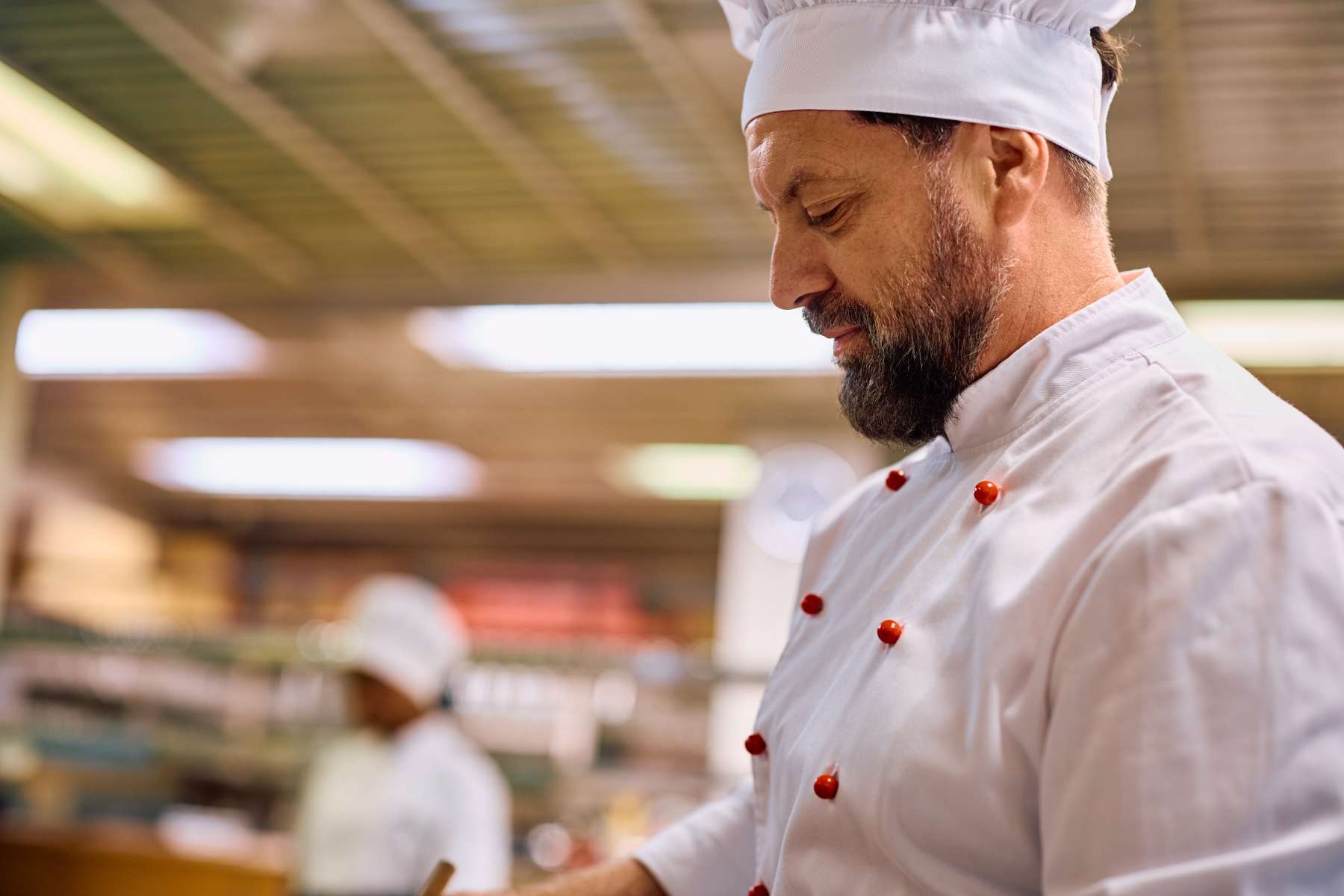
Chef Lee Soo-yeon finishes a course at the 14-seat counter. The pacing of the meal — slow, deliberate, almost conversational — is set entirely by her hands.Min Cho for Hanok Table
It is a Tuesday in early April, and the counter at Hanok Table — fourteen seats of pale white oak, set behind a curtain of charred cedar at the back of an unmarked Tribeca building — has just finished its first seating of the night. Chef Lee Soo-yeon, the thirty-eight-year-old who opened this restaurant in the autumn of 2022 after eight years in the kitchens of Tokyo and Seoul, stands behind the pass with her sleeves rolled to the forearm, inspecting a small ceramic dish of pickled spring greens. She turns it twice in her hand before passing it to a runner. She has not, for the better part of an hour, said anything at all.
This is not, on its face, what one expects from a tasting menu in 2026. The tasting menu — that uniquely showy nineteenth-century invention, now exhausted in most of the world's capitals — has, for some time, been a form in search of a reason. Hanok Table proposes, plainly, that the reason was always Hansik: a five-thousand-year culinary tradition that, despite the global ascendance of doenjang and gochujang, has yet to be given the formal treatment it deserves. Lee's argument, made nightly in twelve courses, is that this oversight has been a mistake.
The room does most of the arguing for her. There is no music, no overhead lighting beyond a band of warm pendants over the counter itself, and no menu. Guests are handed, on arrival, a single folded card on which the twelve courses are written in serif type — no descriptions, no allergens, no flourishes. The card is taken away with the first course and is not returned. What follows is, in effect, an unbroken three-hour conversation, in which the chef speaks first and the diner is invited, eventually, to reply.
The Counter
Hanok Table seats fourteen, and only fourteen. There are no tables. There is no private dining room. There is, in fact, no obvious second act — no upstairs lounge, no listening bar, no merch table by the front. The restaurant, in its entirety, is the counter; and the counter, in its entirety, is the meal.
This is a choice, and a stubborn one. New York is full of beautiful restaurants that would have, in Lee's position, doubled the room. "I considered it," she says, in the brief minutes between the third and fourth course. "And then I thought — no. The conversation only works in one register. Fourteen is the largest number at which everyone can still hear the same silence."
The cedar of the counter was milled in Gangwon Province and shipped, by sea, in a single crate of thirty-two boards. The grain is unfinished and bears, after three and a half years of service, the faint imprint of every dish that has rested on it. The architect, Park Jae-hyun, who designed the room with Lee in 2022, has called this "the most honest surface in New York." It is the kind of statement that, in another context, might read as precious. Here, with the boards still warm to the touch and a soft pool of broth visible in the wood at seat seven, it lands as something closer to fact.
The pacing of the meal is, by design, a slow one. A course finishes at the chef's tempo, not the guest's; this is a restaurant in which a request to "speed things up" would not be denied, but would be received with the same polite incomprehension as a request to speed up a poem. The result is, for some guests, disorienting. For most, it is the point.
Each course finishes at the chef's tempo, not yours. Fourteen is the largest number at which everyone can still hear the same silence.
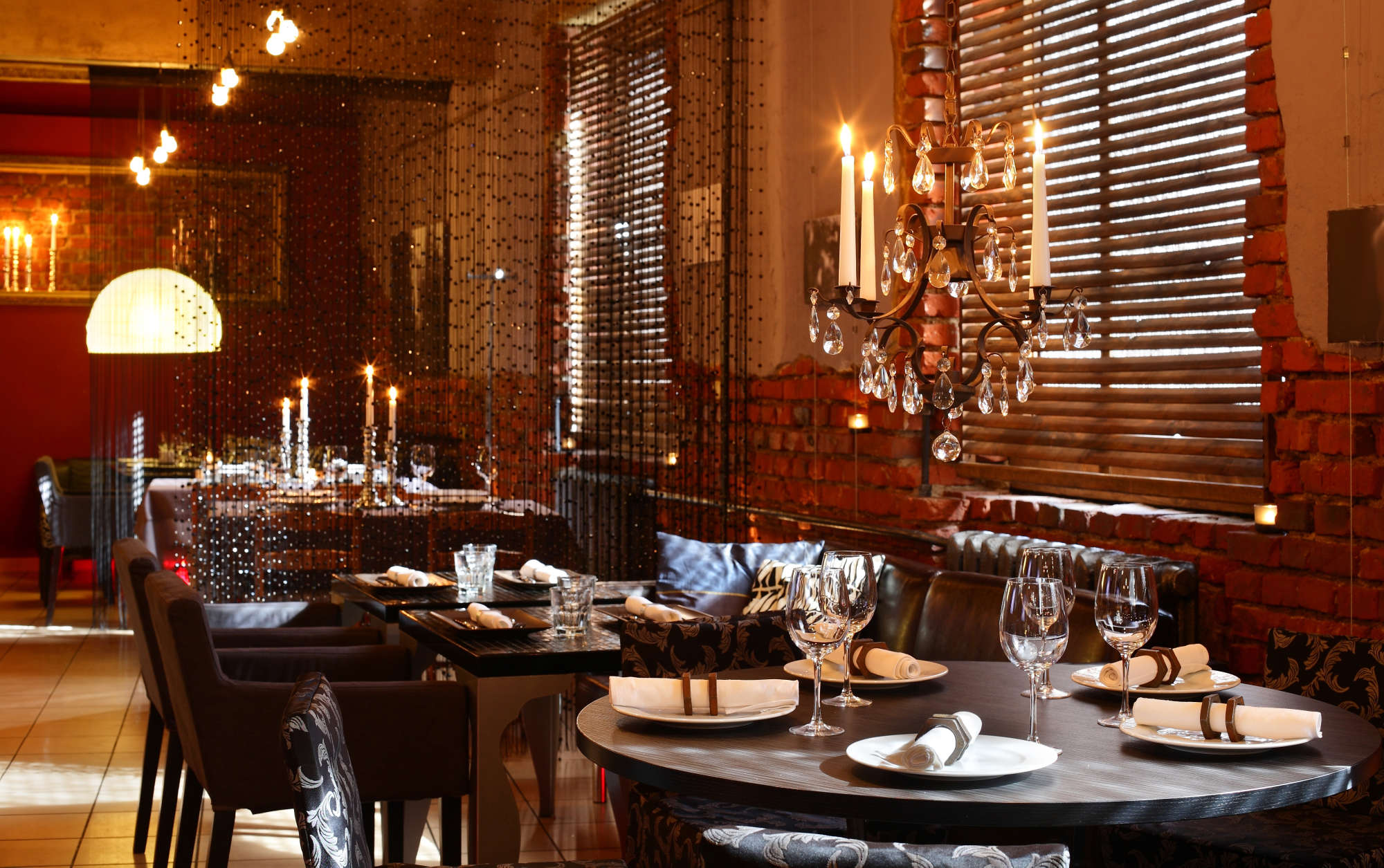
The single chandelier above the counter — a fixture made in Seoul of hammered brass and rice paper — is the room's only ornament. Min Cho for Hanok Table
What is not on the counter is, perhaps, as instructive as what is. There are no flowers. There are no chargers. There are no salt cellars, no bread plates, no second-bottle wine buckets parked at the elbow. Each seat has a single linen runner, a folded napkin, a glass of cold barley tea, and the small ceramic jong-ji — soy dishes — that Lee commissioned from a third-generation studio in Icheon. Everything else is brought by hand, in its time, and removed by hand, in its time.
This austerity is, again, a choice. It is also, Lee insists, the inheritance of the form. Hansik — particularly the variety she cooks, drawn loosely from the banga tradition of the scholar-class kitchens — has always been a cuisine of small dishes, plural and modest. The temptation, in a tasting-menu format, is to dress that modesty in foreign clothing: a wagyu garnish here, a champagne pairing there, a dramatic finish under glass. Lee resists all of it.
The Courses
The menu changes weekly. What follows is the full sequence of courses served on the evening of April 14, 2026. Pairings are optional and selected, by the chef, from a list of natural and traditional Korean ferments.
A single counter, twelve courses, three hours. The pairing flight, $120, is selected nightly and not printed.
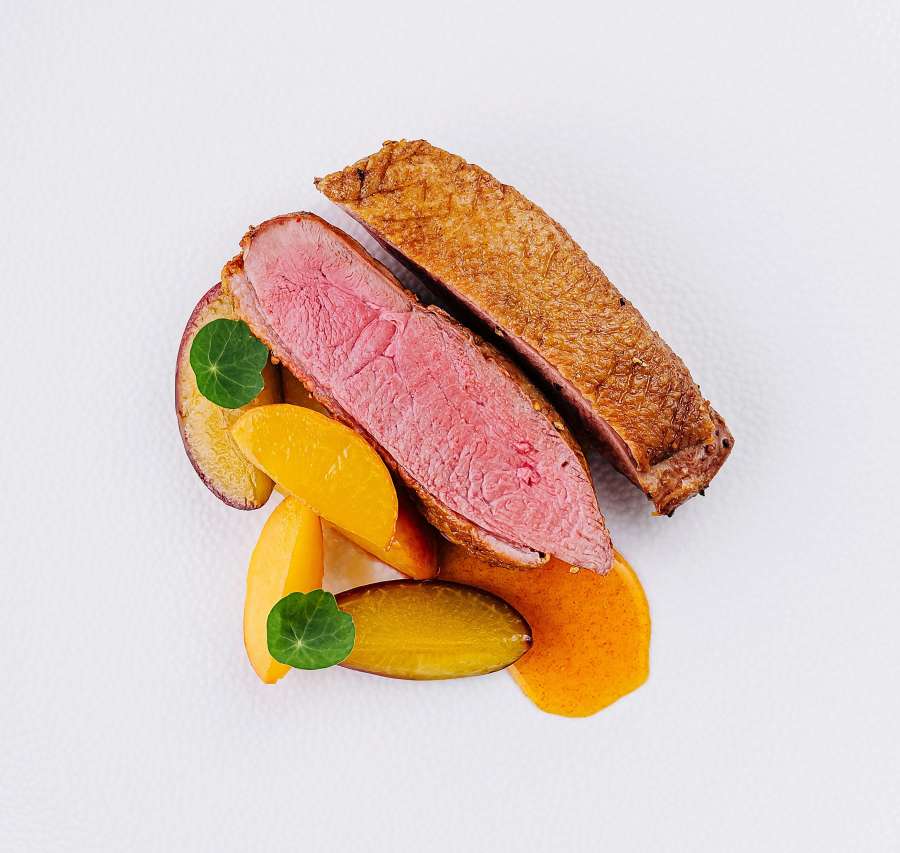
Course 08. Nine-hour duck, stone fruit, pine. Min Cho
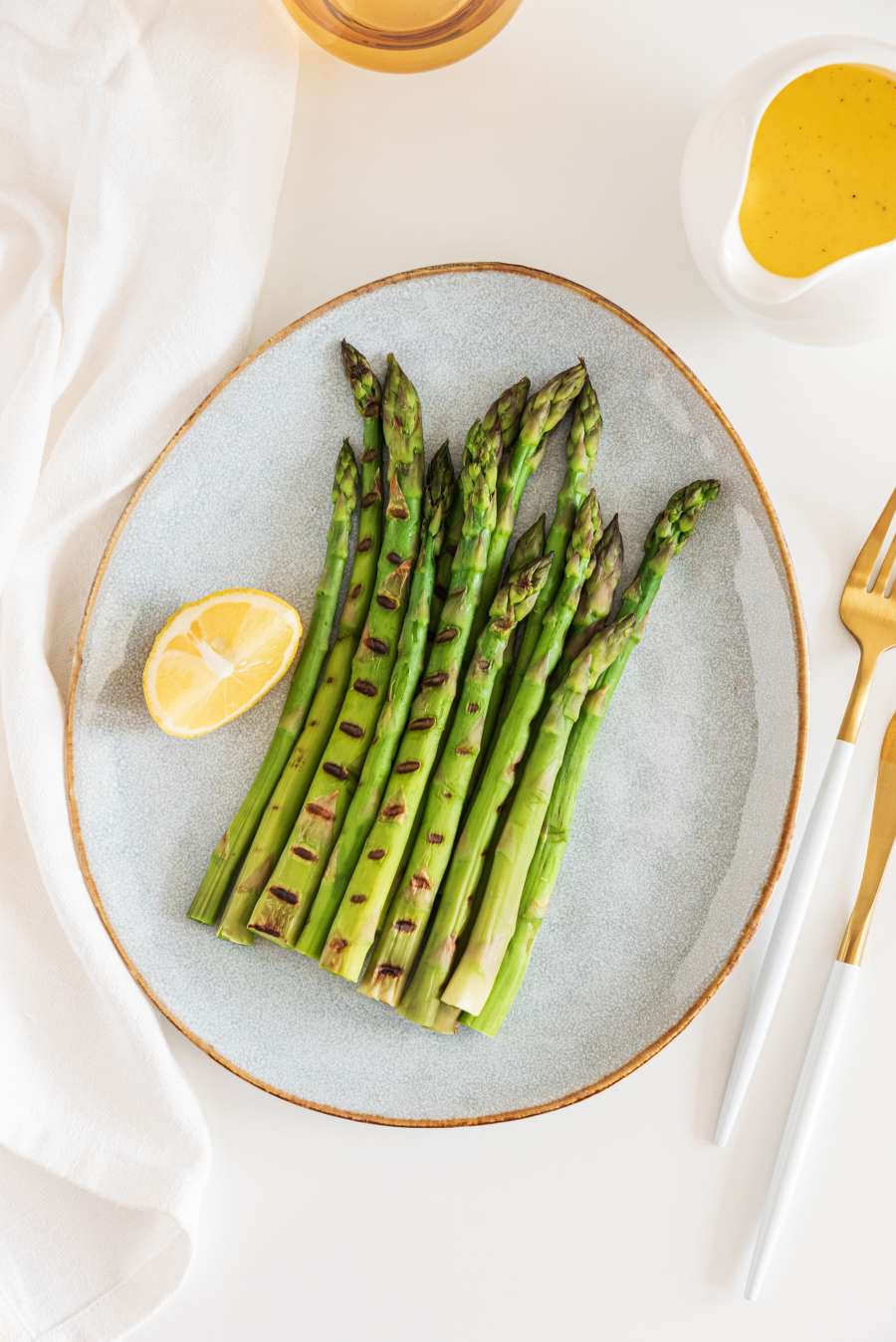
Course 05. Spring asparagus, white binchotan. Min Cho
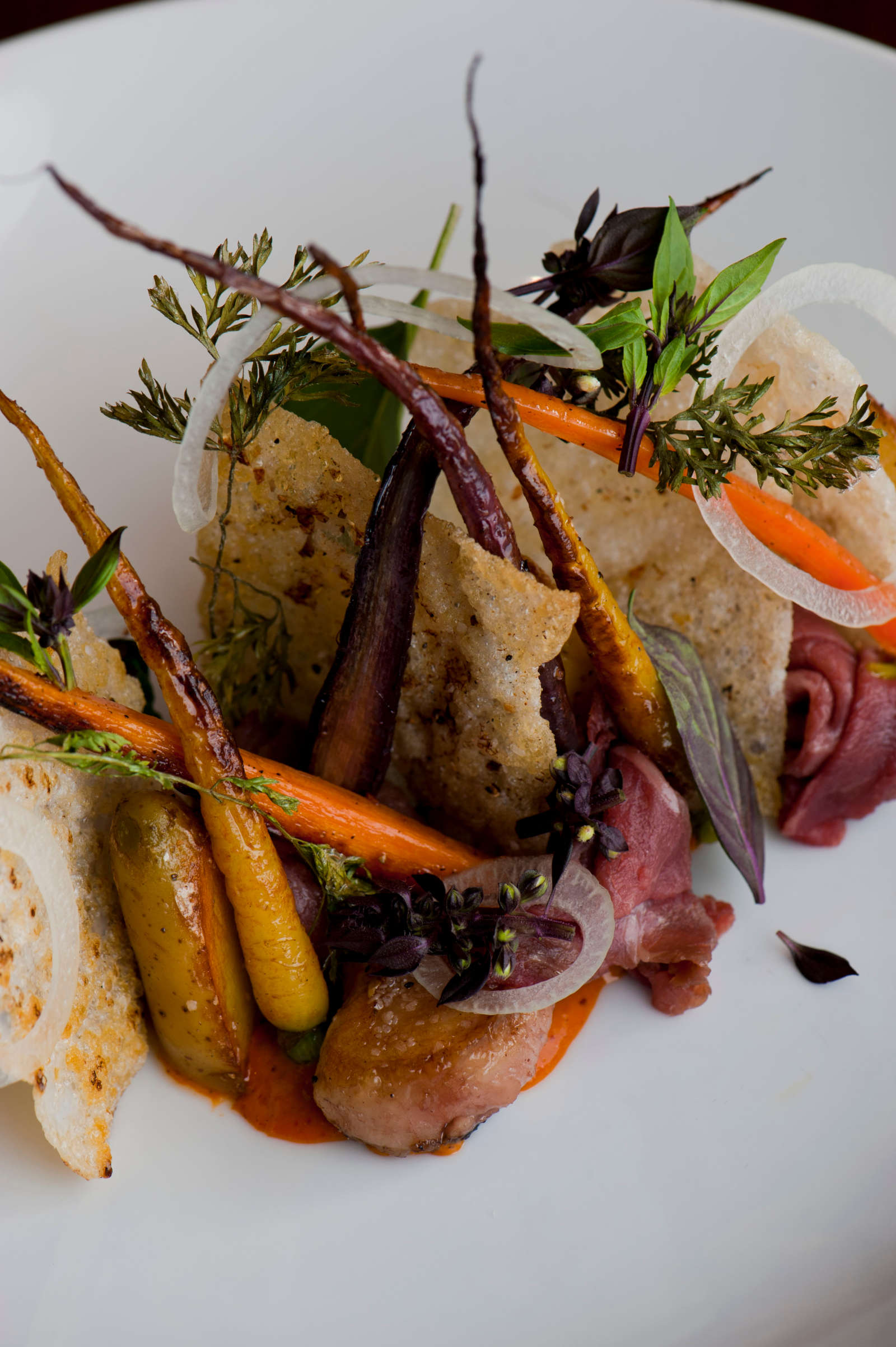
Course 07. Carrots roasted whole and finished with marrow butter — a dish that, Lee notes, "should taste exactly as old as it is." Min Cho for Hanok Table
The Room
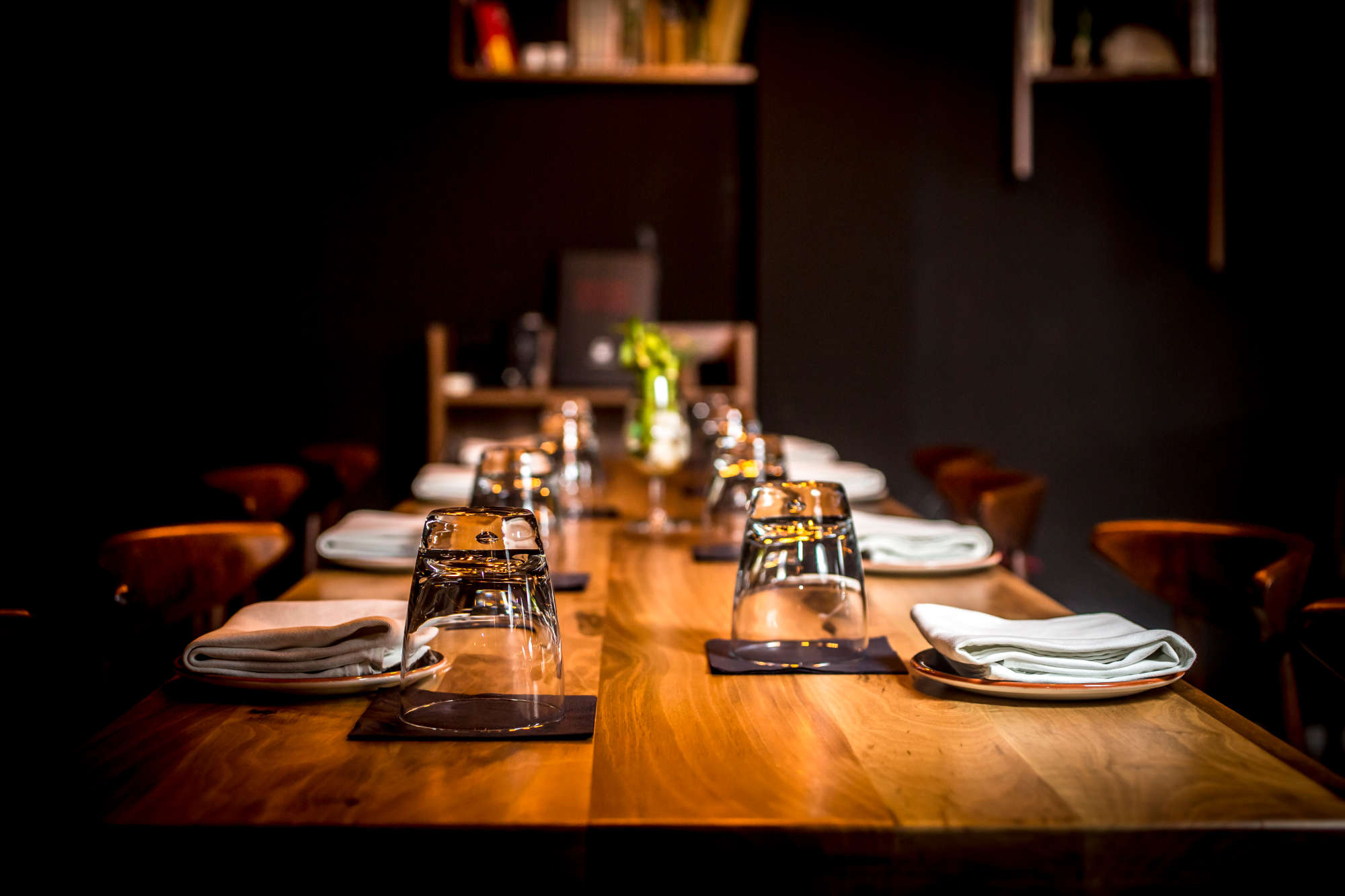
The room, photographed before service. The cedar boards of the counter and the rice-paper screen along the back wall were milled and assembled in Gangwon Province. Min Cho for Hanok Table
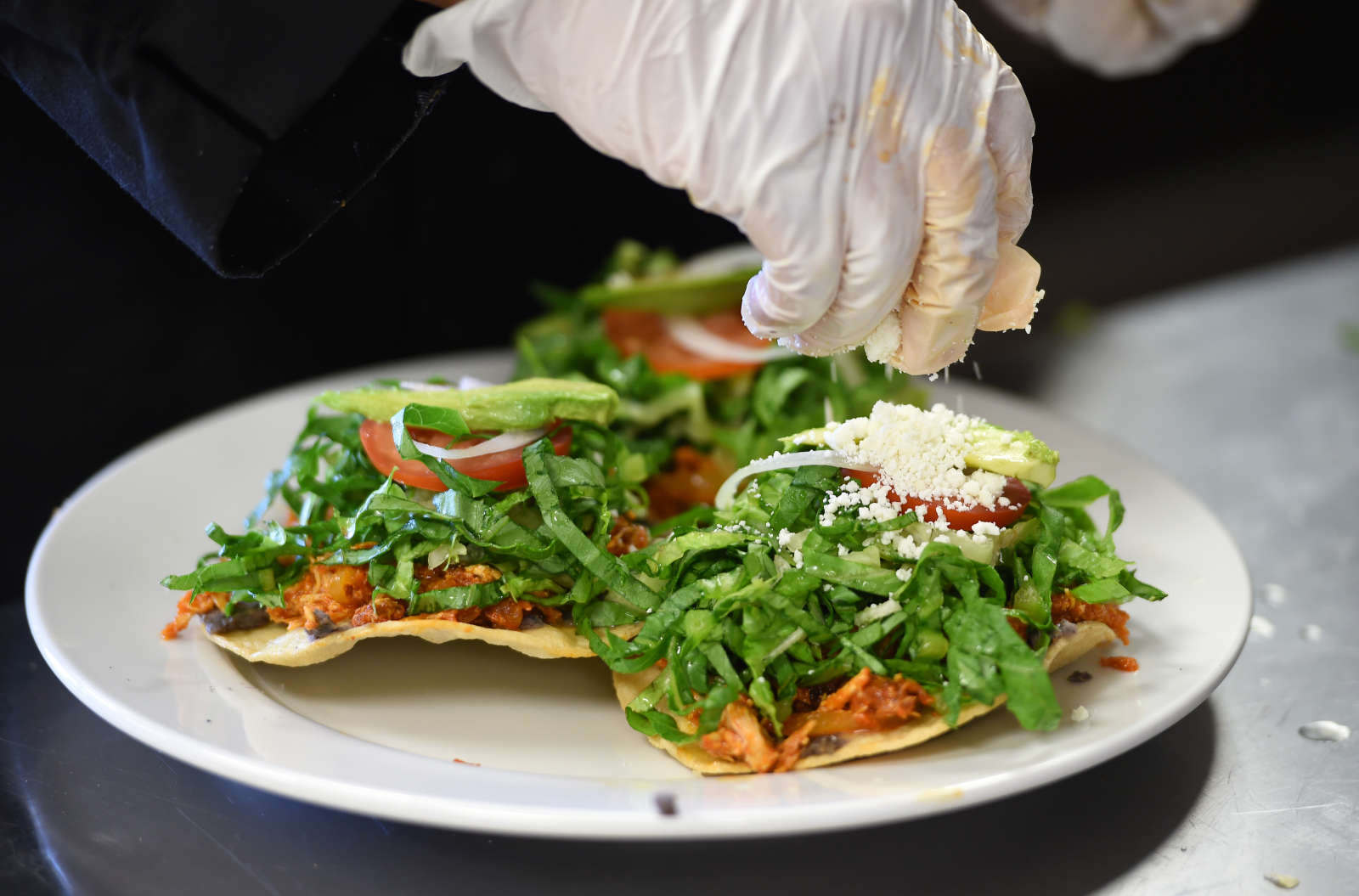
A plating sequence near the close of the meal. Lee works in silence; the runners signal one another by touch. Min Cho for Hanok Table
The Argument
What Lee Soo-yeon is doing at Hanok Table is, in the end, less a culinary project than a curatorial one. She is not inventing a new cuisine, and she is not — pointedly — exporting an old one. She is, instead, making a case: that Hansik, in its full form, deserves the kind of formal stage that French and Japanese cooking have enjoyed for the better part of a century. The case is being made, plate by plate, to about thirty-six guests a night.
It is, on the evidence of the meal we ate in early April, a strong case. Whether or not it persuades anyone outside the room is, for the moment, beside the point. Inside the room, in the slow forty-five minutes between the rice course and the closing tea, with the candle on the counter halfway burned and a faint smell of doenjang still on the napkin, the argument lands as something closer to settled.
Hanok Table · 47 N Moore Street · Tribeca · Open by reservation